Excavators are among the most versatile machines used in construction, excavation, infrastructure, landscaping, quarrying, and industrial projects. One of the main reasons for their versatility is the wide range of attachments available for different types of work.
Among these attachments, the excavator bucket is one of the most commonly used. However, not every bucket is designed for the same application. Choosing the wrong bucket can affect digging performance, material handling, productivity, and equipment efficiency.
Understanding the different excavator bucket types can help contractors and equipment operators select a bucket that matches the material, working conditions, and type of excavation project.
This guide explains the types of excavator buckets, their common applications, and important factors to consider when selecting an excavator bucket for construction projects in the UAE.
What Are Excavator Buckets?
An excavator bucket is an attachment mounted to the end of an excavator's arm. It is designed to dig, scoop, carry, or move materials depending on its shape and construction.
Excavator buckets are available in different sizes, profiles, tooth configurations, and materials. The appropriate bucket depends on factors such as:
Because construction conditions can vary significantly between projects, selecting the appropriate bucket is an important part of excavator operation.
Why Are There Different Types of Excavator Buckets?
Different materials require different bucket designs.
For example, a bucket designed for loose soil may not be suitable for breaking through hard or rocky ground. Similarly, a bucket designed for heavy-duty excavation may not be the most appropriate choice for handling softer materials.
Manufacturers therefore produce different bucket profiles and configurations to match specific applications.
The most suitable option depends on the excavator and the job requirements.
Common Excavator Bucket Types and Uses
Let's look at some of the most common excavator bucket types and uses.
1 1. General-Purpose Digging Bucket
A general-purpose digging bucket is commonly used for everyday excavation work.
It can be suitable for materials such as:
- Soil
- Sand
- Clay
- Loose gravel
- General fill material
These buckets typically provide a balance between digging capability and material capacity.
They are often used for general construction and excavation tasks where extremely hard or abrasive material is not the primary concern.
2 2. Heavy-Duty Excavator Bucket
A heavy duty excavator bucket is designed for more demanding working conditions.
These buckets can feature reinforced construction, stronger wear components, and additional protection in areas exposed to high loads and abrasion.
Heavy-duty buckets may be suitable for applications involving:
- Hard-packed soil
- Dense clay
- Gravel
- Abrasive materials
- Demolition-related excavation
- Heavy construction work
The exact design should be matched to the excavator and application.
3 3. Rock Bucket
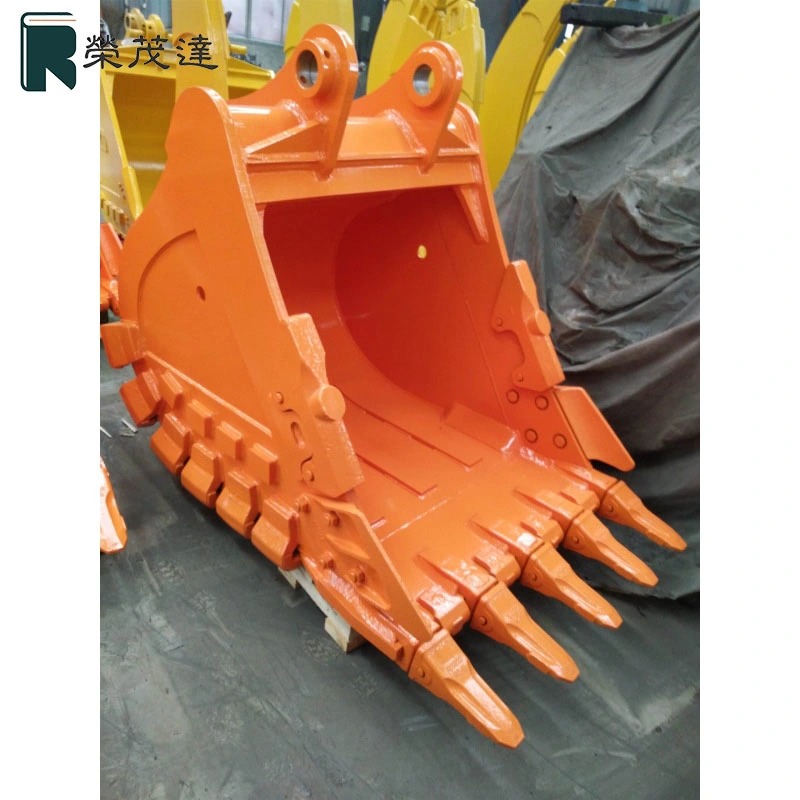
A rock bucket is designed for demanding excavation where the ground contains rocks, compacted material, or highly abrasive conditions.
Rock buckets may incorporate reinforced structures, heavy-duty teeth, and additional wear protection.
They can be used for:
- Rock excavation
- Quarry applications
- Rocky construction sites
- Heavy-duty excavation
- Handling abrasive materials
Using a standard bucket in extremely abrasive conditions can result in faster wear, making an appropriately reinforced bucket more suitable for such applications.
4 4. Trenching Bucket
A trenching bucket is designed for creating relatively narrow and controlled trenches.
It can be useful for projects involving:
- Utility installation
- Drainage
- Cable installation
- Pipeline work
- Irrigation
- Foundation-related work
The bucket width can be selected according to the required trench dimensions and excavator capabilities.
5 5. Grading or Cleaning Bucket
A grading or cleaning bucket is generally wider and designed for finishing and material handling rather than aggressive digging.
Typical applications include:
- Grading
- Levelling
- Ditch cleaning
- Slope finishing
- Landscaping
- Material spreading
The wider profile allows operators to cover a larger area during finishing operations.
6 6. Ditch Cleaning Bucket
A ditch cleaning bucket is designed for cleaning and maintaining drainage channels, ditches, and similar areas.
Its wider design can help with:
- Ditch maintenance
- Drainage work
- Slope shaping
- Cleaning loose material
- General finishing
The exact bucket width and profile should be selected according to the excavator and the required application.
7 7. Tilt Bucket
A tilt bucket can rotate or tilt relative to the excavator arm, depending on its hydraulic configuration.
This can provide additional flexibility for:
- Sloping
- Grading
- Drainage work
- Landscaping
- Site finishing
Tilt buckets can be useful when the operator needs to work at different angles without constantly repositioning the entire excavator.
8 8. Clamshell Bucket
A clamshell bucket operates differently from a conventional digging bucket. It opens and closes to grab and move material.
Clamshell buckets can be used for applications such as:
- Material handling
- Deep excavation
- Loading loose materials
- Dredging-related work
- Industrial handling
They are particularly useful where vertical digging or controlled material handling is required.
How to Choose the Right Excavator Bucket
Choosing between the different types of excavator buckets requires consideration of the actual job conditions.
Consider the Material
Start by identifying what the excavator will be digging or handling. Soft soil, clay, gravel, rock, and abrasive materials can require different bucket designs.
Consider the Excavator Size
The bucket must be compatible with the excavator. Important considerations include:
- Operating weight
- Hydraulic capacity
- Attachment dimensions
- Pin diameter
- Arm configuration
- Maximum recommended bucket capacity
A bucket that is too large or heavy for a particular machine can affect performance and place unnecessary stress on the equipment.
Consider Bucket Capacity
Larger buckets can move more material per cycle, but maximum bucket capacity should always be appropriate for the excavator and application.
The goal is to match bucket capacity with the machine's capabilities and the material being handled.
Consider Ground Conditions
Ground conditions have a major influence on excavator bucket selection.
A standard digging bucket may work well in ordinary soil, while rocky or highly compacted ground may require a reinforced or rock-oriented bucket.
Consider Wear and Durability
For frequent or heavy-duty work, bucket construction and wear protection become increasingly important.
Features such as reinforced cutting edges, wear plates, and heavy-duty teeth can help a bucket withstand demanding applications.
Excavator Buckets for Construction Projects in the UAE
Construction projects across the UAE can involve a wide range of working conditions and materials. Excavators may be used for:
The appropriate bucket depends on the specific application rather than simply the location of the project.
For example, a contractor working on general site excavation may require a different bucket from one working in rocky ground or performing drainage work.
This makes proper excavator bucket selection important for achieving efficient and consistent machine performance.
Custom Excavator & Loader Bucket Solutions in UAE
Bab Al Rayan manufactures, rebuilds, and reinforces heavy-duty excavator buckets, wheel loader buckets, and custom earthmoving attachments in Sharjah for contractors across Dubai, Abu Dhabi, and the Northern Emirates.
Explore Bucket Fabrication & RepairExplore Bucket Fabrication & RepairExcavator Bucket Teeth and Cutting Edges
Bucket teeth and cutting edges are important components of an excavator bucket.
Teeth help penetrate the material during digging, while the cutting edge helps the bucket cut and collect material.
Different tooth configurations can be designed for different applications. Heavy-duty or rock applications may require stronger wear components than ordinary soil excavation.
Regular inspection of teeth and cutting edges can also help identify excessive wear before it begins to affect bucket performance.
When Should an Excavator Bucket Be Replaced?
An excavator bucket does not necessarily need to be replaced simply because it has visible wear. Depending on the condition, individual components may be replaceable or repairable.
However, significant structural damage or excessive wear can affect performance and safety.
Potential warning signs include:
The appropriate repair or replacement decision depends on the condition of the bucket and its intended use.
Can One Excavator Use Different Bucket Types?
Yes. One excavator can often use multiple attachments, provided they are compatible with the machine and attachment system.
A contractor might use:
- A digging bucket for general excavation
- A rock bucket for hard ground
- A trenching bucket for narrow trenches
- A grading bucket for finishing
- A clamshell bucket for specific material-handling applications
This versatility is one of the major advantages of excavator attachments.
How the Right Bucket Can Improve Excavator Productivity
Using an appropriate bucket can help an excavator perform the intended task more efficiently.
The right combination of bucket size, shape, teeth, and construction can help with:
However, bucket selection should always consider the excavator manufacturer's specifications and the conditions of the particular job.
Maintenance Tips for Excavator Buckets
Proper maintenance can help extend bucket service life. Useful practices include:
- Inspect bucket teeth regularly.
- Check cutting edges for excessive wear.
- Inspect welds and structural areas for cracks.
- Check side cutters and wear plates.
- Replace worn components when necessary.
- Keep attachment connection points properly maintained.
- Use the bucket for its intended application.
- Avoid using unsuitable buckets for extremely abrasive materials.
Regular inspection is especially important for equipment operating for long hours in demanding construction environments.
Frequently Asked Questions
Conclusion
Understanding excavator bucket types makes it easier to match an attachment to the requirements of a particular construction or earthmoving project.
General-purpose digging buckets can handle common excavation work, while heavy-duty and rock buckets are designed for more demanding conditions. Trenching, grading, ditch cleaning, tilt, and clamshell buckets provide additional capabilities for specialized applications.
For projects in the UAE, the right choice should be based on the excavator's specifications, material, ground conditions, required capacity, and type of work.
Selecting an appropriately designed bucket can help support efficient excavation, reduce unnecessary wear, and make better use of the excavator's capabilities.
Need Custom Excavator Buckets or Attachment Repairs in UAE?
Contact Bab Al Rayan steel and fabrication experts in Sharjah for custom bucket manufacturing, Hardox reinforcement, and attachment maintenance across the UAE.