Heavy earthmoving equipment operates under demanding conditions. Excavators, loaders, dozers, and other construction machines regularly experience high loads, vibration, friction, and repeated movement. Over time, these conditions can cause wear to the bores, housings, and mounting points that connect different components.
When these areas become worn or damaged, line boring can be used to restore the bore to the required dimensions and alignment. But what is line boring, how does the process work, and when does heavy equipment need it? This guide explains the line boring process, its applications, and why it is an important part of earthmoving equipment repair.
What Is Line Boring?
Line boring is a precision machining process used to repair and restore worn or damaged bores in heavy machinery.
A bore is a precisely machined hole that allows components such as pins, shafts, or bushings to fit correctly. In earthmoving equipment, these bores are commonly found around attachment points, boom connections, bucket linkages, and other high-load areas.
With continuous use, a bore can become enlarged, oval-shaped, misaligned, or otherwise worn. Simply replacing a pin or bushing may not solve the underlying problem if the surrounding bore itself has been damaged.
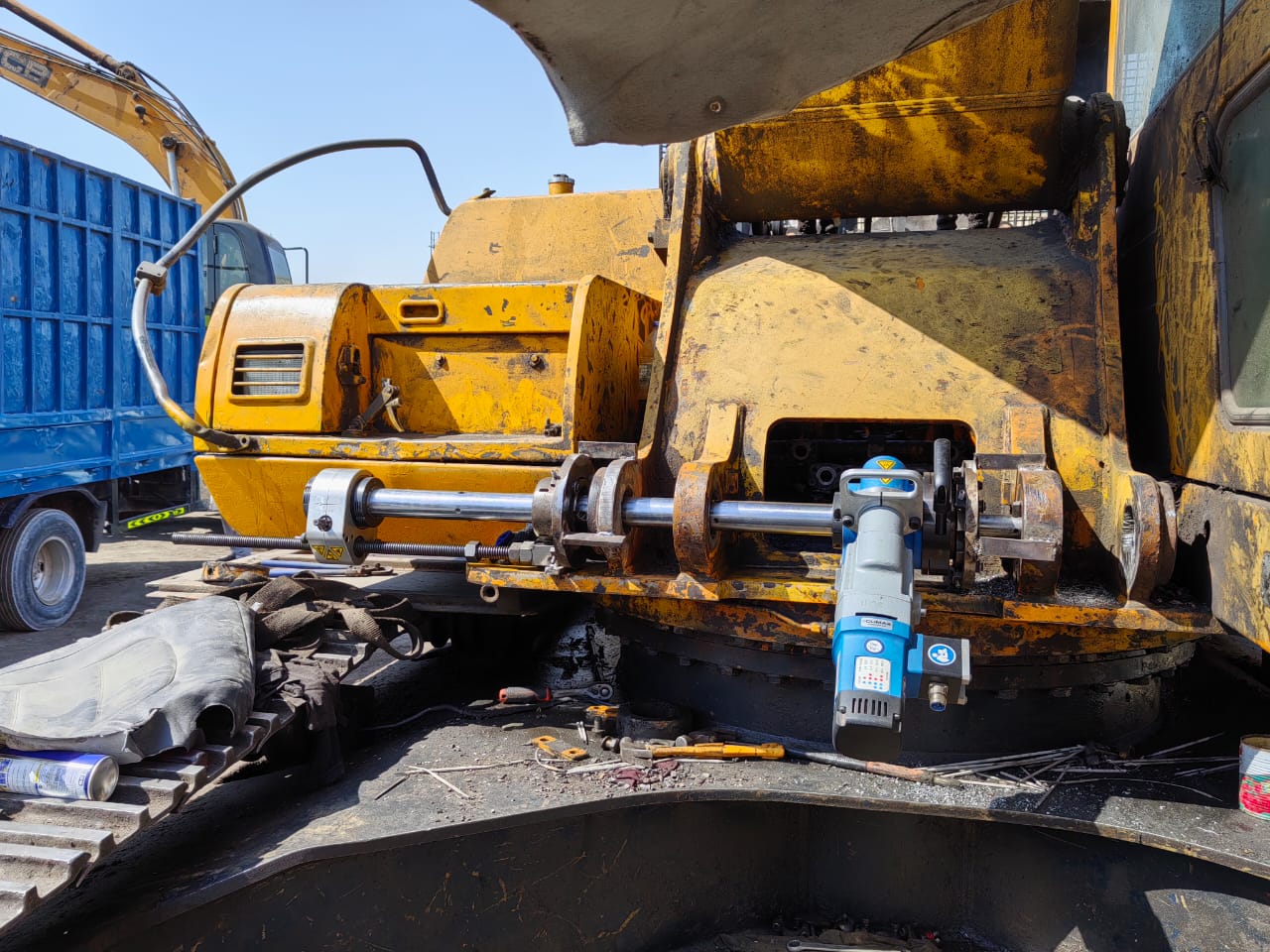
During line boring, specialized equipment is used to machine the worn bore back to the required size and alignment. Depending on the condition of the component, material may also need to be added before machining.
Why Do Heavy Equipment Bores Wear Out?
Earthmoving machinery works in environments where components are exposed to significant mechanical stress. Some common causes of bore wear include:
Once wear begins, continued operation can cause the problem to become more severe. For equipment used on construction, infrastructure, quarrying, mining, and industrial projects in the UAE, regular inspection can help identify wear before it leads to more extensive component damage.
What Is the Line Boring Process?
The exact procedure depends on the equipment and the condition of the damaged area, but a typical line boring process involves several important stages:
1 Inspection and Measurement
The first step is to inspect the worn area and determine the extent of the damage. Measurements can be taken to identify:
- Bore diameter
- Bore condition
- Wear patterns
- Alignment
- Pin and bushing condition
- Amount of material that needs to be removed or restored
Accurate measurements are essential because the repaired bore must meet the required dimensions and alignment.
2 Preparing the Equipment
The machine or component is positioned so that the damaged bore can be accessed safely. The area is cleaned and prepared before the machining equipment is installed.
3 Setting Up the Line Boring Machine
A line boring machine is positioned and aligned with the bore that requires repair. The setup needs to be precise because the machining operation must restore the correct relationship between the connected bores.
4 Machining the Bore
The boring bar removes a controlled amount of material from the damaged bore. The objective is to create a clean, accurately sized bore while maintaining the required alignment.
5 Restoring the Bore When Necessary
If the bore has excessive wear, machining alone may not provide enough material for the required final dimension. In such cases, the worn area may need to be built up using an appropriate welding or metal restoration process before it is machined again.
6 Final Measurement and Inspection
After machining, the repaired area is measured again to verify its dimensions and alignment. The repaired bore can then be prepared for the appropriate pin, bushing, or related component.
What Is Line Boring Used For?
Line boring for heavy equipment is commonly associated with machinery that contains high-load pivot points and articulated connections. Applications can include:
The exact repair requirements depend on the machine design and the location of the worn bore.
Excavator Line Boring
Excavator line boring is particularly important because excavators have several heavily loaded pivot and attachment points. The boom, arm, bucket, and linkage systems repeatedly move under substantial loads. Over time, their connecting bores and pins can experience significant wear.
Common areas that may require inspection include:
- Boom mounting points
- Arm connections
- Bucket linkage points
- Bucket mounting areas
- Hydraulic cylinder mounts
- Other pivot locations
When a bore becomes worn, replacing only the pin or bushing may not provide a lasting solution. If the bore itself has become damaged or misaligned, it may require machining and restoration.
Signs That Heavy Equipment May Need Line Boring
Identifying bore wear early can help prevent more extensive damage. Possible warning signs include:
Excessive Play
Unusual movement around pins and pivot points can indicate wear in the bore, pin, or bushing.
Uneven Component Movement
If an attachment or linkage does not move smoothly, worn or misaligned connection points may be contributing to the problem.
Repeated Pin or Bushing Wear
If replacement pins or bushings wear out unusually quickly, the underlying bore should also be inspected.
Visible Wear
Cracks, deformation, unusual wear patterns, or damage around a mounting point should be investigated.
Increased Noise or Vibration
Unusual movement, knocking, or vibration around a pivot can indicate excessive clearance or component wear.
Note: These symptoms do not necessarily mean that line boring is required. A qualified inspection is needed to determine the actual cause of the problem.
Line Boring vs. Replacing the Entire Component
When a bore becomes damaged, equipment owners may consider replacing the entire component. However, depending on the machine and the extent of the damage, repairing the existing component through machining and restoration may be an alternative.
The appropriate approach depends on factors such as:
- Extent of damage
- Component condition
- Machine design
- Required tolerances
- Part availability
- Downtime & repair costs
A proper inspection can help determine which repair method is appropriate.
Why Proper Alignment Matters
"Alignment is one of the most important considerations in bore repair. Connected components need to operate in the correct relationship with one another. If a repaired bore is incorrectly positioned or misaligned, it can contribute to uneven loading and accelerated wear."
Professional line boring therefore involves more than simply making a hole larger or round again. The repair must take into account the required dimensions and alignment of the connected components.
Benefits of Line Boring for Heavy Equipment
When appropriate for the equipment and damage involved, line boring can provide several practical benefits:
Restores Worn Bores
The process can restore damaged or worn pivot and mounting points to the required dimensions.
Helps Restore Proper Component Fit
Accurate machining can allow the appropriate pin and bushing arrangement to function as intended.
Can Reduce Equipment Downtime
Repairing a damaged bore may allow equipment to return to operation without waiting for a complete replacement component, depending on the circumstances.
Supports Equipment Maintenance
Addressing bore wear can form part of a broader preventive maintenance and earthmoving equipment repair program.
Can Extend the Useful Life of Components
Repairing suitable components instead of immediately replacing them may help equipment owners get additional service life from existing machinery.
Line Boring in the UAE
Earthmoving and construction equipment used in the UAE can operate in demanding environments, including construction sites, infrastructure projects, industrial facilities, and other heavy-duty applications.
Dust, abrasive materials, heavy loads, frequent equipment movement, and long operating hours can contribute to mechanical wear. For this reason, regular equipment inspections and timely maintenance are important parts of managing heavy machinery.
When worn pivot or mounting bores are identified, an appropriate repair solution can help restore the equipment and reduce the risk of continued wear.
Looking for Machining & Bore Repair in UAE?
For projects requiring professional repair, equipment owners can also explore line boring for earthmoving equipment in Sharjah and assess the appropriate repair approach based on the machine and its condition.
Explore Line Boring ServicesExplore Line Boring ServicesHow to Reduce Bore Wear
While wear cannot always be prevented, proper maintenance can help reduce unnecessary damage. Equipment owners should consider:
- Following the manufacturer's maintenance recommendations
- Maintaining proper lubrication
- Inspecting pins and bushings regularly
- Addressing excessive play early
- Avoiding continued operation when serious wear is identified
- Keeping moving components clean where practical
- Scheduling inspections for heavily used equipment
Early attention to worn components can help prevent a relatively small issue from developing into a more extensive repair.
Frequently Asked Questions
Conclusion
Line boring is an important precision repair process for maintaining heavy earthmoving equipment. By restoring worn or damaged bores and addressing alignment issues, the process can help suitable machinery return to reliable operation.
Understanding the signs of bore wear and addressing problems early can also help equipment owners avoid unnecessary damage and downtime.
For earthmoving equipment operating in the UAE, regular inspection, proper lubrication, and timely repairs are important parts of maintaining machine performance and service life.
Need Expert Line Boring or Machining in Sharjah / UAE?
Contact Bab Al Rayan engineering experts for on-site inspection, precision boring, and custom fabrication support.